Royal Family’s 7 scariest lookalikes pictured – the likeness is scary
Royal lookalikes have left royal fans doing a double take, with professional impersonators and surprising family resemblances making some photographs look almost unreal. From King Charles and Prince Harry to Kate Middleton and the late Queen Elizabeth II, these uncanny similarities show just how striking the royal family’s features can be.
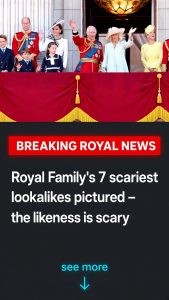
Royal lookalikes have fascinated the public for decades, but some professional impersonators can create such a convincing resemblance that people genuinely need a second look. From King Charles and Prince Harry to Kate Middleton and the late Queen Elizabeth II, professional doubles have built careers by recreating the appearance, clothing and mannerisms of some of the world’s most recognizable royals. The phenomenon is not new, but social media has made these uncanny comparisons even more striking, with photographs and videos quickly reaching millions of royal fans.
One of the most recognizable examples is the professional King Charles lookalike. Several performers specialize in recreating the monarch’s distinctive appearance, including his hairstyle, facial features, clothing and mannerisms. One established impersonator has even been described as having taken the place of the real Charles in the Royal Box at the Lyceum Theatre during celebrations surrounding the then-Prince’s 50th birthday. Such performances demonstrate how carefully professional lookalikes study not only a royal’s face but also their posture, voice and public behavior.
Prince Harry has also inspired some remarkably convincing doubles. One professional impersonator, Rhys Whittock, became a full-time Harry lookalike after people repeatedly pointed out his resemblance to the Duke of Sussex. Another Harry impersonator famously caused confusion in Memphis when crowds reportedly believed they were seeing the real prince. A Harry lookalike was even spotted at the 2024 Met Gala, prompting social-media users to wonder briefly whether the Duke himself had appeared at the event.
Kate Middleton has perhaps one of the most recognizable professional doubles in the royal lookalike world. Heidi Agan began working as a Kate lookalike in 2012 and has since appeared at events, on television and in publicity campaigns. Her resemblance became particularly notable in 2024, when false claims circulated online suggesting that she had appeared in footage with Prince William. Agan publicly rejected the claim, explaining that she was working elsewhere at the time. The incident showed just how convincing a professional royal lookalike can become when photographs and video are viewed without context.
Prince William has also had professional doubles working alongside other members of the royal lookalike industry. Agencies offer William impersonators for public events, themed entertainment and promotional appearances, sometimes alongside doubles portraying Kate, Harry, Charles and other members of the Royal Family. The fascination goes beyond facial similarity, because successful impersonators often recreate the hairstyle, clothing, posture and public mannerisms associated with the person they represent.
The late Queen Elizabeth II was another royal with an exceptionally successful professional double. Mary Reynolds spent more than three decades impersonating the monarch after people first told her as a teenager that she resembled Elizabeth. She began professional work in 1988 and appeared in television and film productions, eventually becoming one of Britain’s best-known royal lookalikes. Reynolds retired from professional impersonation following the Queen’s death in 2022, saying she wanted to step away from the role out of respect for the monarch.
Princess Diana continues to inspire lookalikes more than two decades after her death. Professional Diana doubles recreate her famous hairstyles, clothing and public appearance for events, television, advertising and photographs. The interest is especially strong because Diana remains one of the most recognizable figures in modern royal history. There are also genuine family resemblances that frequently attract attention: Diana’s nieces Lady Amelia and Lady Eliza Spencer have repeatedly been noted for their striking resemblance to their late aunt.
Queen Camilla has also become part of the growing royal impersonator industry. Professional agencies now offer Camilla lookalikes, sometimes booking them together with King Charles doubles to create an entire royal pairing at events. These performances can be surprisingly convincing because the impersonators do more than copy facial features; they also recreate clothing styles, hairstyles, gestures and the formal atmosphere associated with royal appearances.
What makes these photographs so fascinating is the uncanny effect created when familiar royal features are reproduced by someone who is not actually a member of the Royal Family. Professional impersonators can sometimes fool people for a few seconds, particularly when they are dressed appropriately or photographed from a distance. The lookalike industry has become a legitimate form of entertainment, with performers hired for television, advertising, corporate events, private parties and public appearances.
Ultimately, the seven royal lookalikes highlight something remarkable about the public’s fascination with the monarchy. Whether it is the familiar face of King Charles, the distinctive appearance of Prince Harry, the elegant image of Kate Middleton, the recognizable features of Prince William, the enduring memory of Queen Elizabeth II, Princess Diana’s iconic style or Camilla’s increasingly familiar public image, the resemblance can produce an extraordinary double-take. But despite how convincing some photographs may appear, these performers are impersonators rather than members of the Royal Family themselves. Their popularity shows just how powerful the visual identity of Britain’s royals has become around the world.