History Just Shifted in One Single Moment
History just shifted in one single moment. King Charles standing face-to-face with Catherine… placing his hands near the crown she’s wearing… while the entire room watches in silence.
William behind her. Camilla and Anne looking on. The weight of that crown. The way she smiled. This isn’t just a ceremony. Something much bigger just happened.
The full photos and what this moment actually means are already spreading at lightning speed, but the true significance lies in the quiet intensity of those few seconds.
Inside the gilded state apartments, under the soft blaze of chandeliers and the watchful gaze of centuries-old portraits, the room fell into a rare and profound hush. Catherine stood at the centre, the historic diamond-and-pearl circlet resting on her dark hair — the same crown that had remained unseen since 1987 until she brought it back into the light. The emerald velvet of her gown deepened the drama, its rich colour grounding the brilliance of the jewels.
King Charles stepped forward. He did not speak. He simply raised his hands and, with deliberate care, adjusted the circlet by the lightest touch of his fingers near its sides. The gesture lasted only a moment, yet it carried the full weight of lineage, succession, and unspoken trust. Catherine held his gaze and smiled — not the polished public smile the world knows so well, but a softer, more private expression that seemed to acknowledge the gravity of what was taking place.
Behind her stood Prince William, upright in full uniform, his expression composed yet unmistakably attentive. To one side, Queen Camilla and the Princess Royal watched in stillness. The rest of the room — guests, household staff, a handful of carefully positioned cameras — remained frozen. No one moved. No one spoke. The only sound was the faint rustle of fabric and the distant tick of a clock.
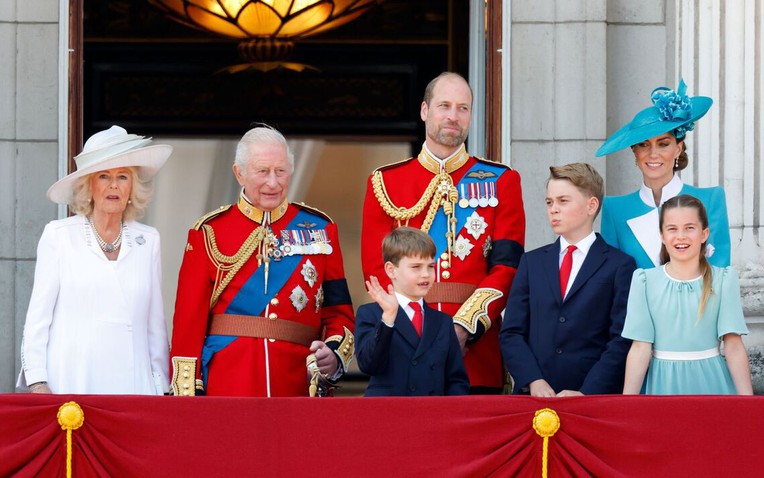
What has captured the internet is the intimacy of the exchange inside such a formal setting. Royal protocol rarely allows for such a direct, physical interaction between monarch and heir’s wife in full view of an audience. Charles’s hands near the crown, the slight lean of Catherine’s head, the shared look that passed between them — every frame has been slowed, zoomed, and analysed. Viewers keep returning to Catherine’s smile: steady, warm, and entirely unforced. It is the smile of someone who understands exactly what the moment represents.
Commentators have been careful with their language, yet the underlying consensus is clear. This was more than a polite adjustment of jewellery. In the carefully coded world of the monarchy, gestures carry meaning. A king publicly acknowledging the presence of a rarely worn crown on the head of the future queen consort sends a signal that needs no official statement. The presence of William, Camilla, and Anne as silent witnesses only deepened the sense that something irreversible had been marked.
The crown itself has become central to the conversation. Last seen in public nearly forty years ago, its return on Catherine’s head already felt significant. Charles’s quiet interaction with it transformed the appearance into something closer to a living transfer of symbolism. The weight of the piece — both literal and historical — seemed to settle more firmly in that instant. Online, the phrase “the weight of that crown” has been repeated thousands of times, often paired with the image of Catherine’s calm expression.
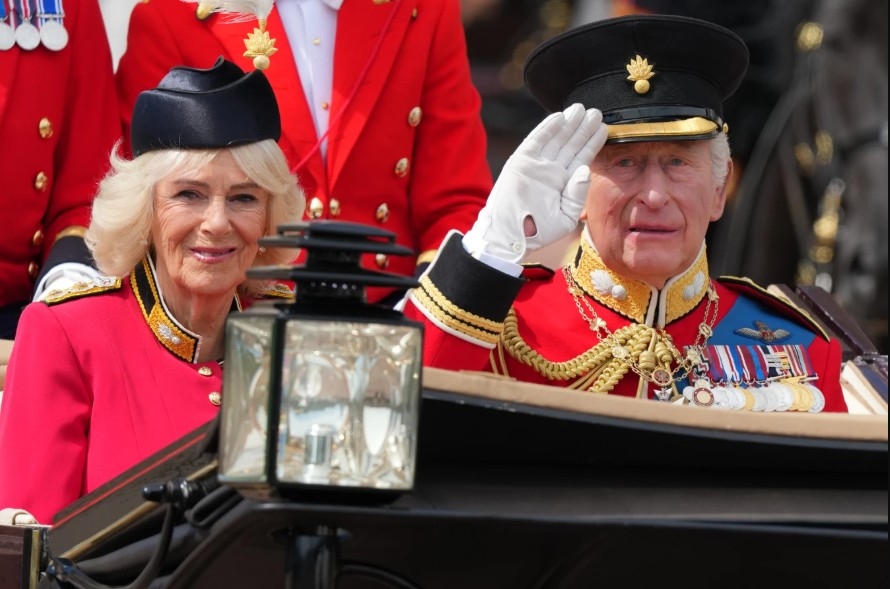
What everyone is really talking about is the shift in atmosphere. For years the public has watched Catherine grow into her role with measured grace. This moment felt like a visible confirmation that the institution itself recognises the same trajectory. William’s presence behind her completed the picture of continuity: the current king, the future king, and the woman who will stand beside the throne in the years ahead.
Social media has responded with a mixture of awe and intense scrutiny. Side-by-side images of the exchange have been shared alongside archival photographs of earlier royal women receiving similar marks of recognition. Fashion and royal accounts have focused on the visual poetry — the emerald velvet, the historic circlet, the formal uniforms, the red carpet beneath their feet — while deeper commentary has turned to questions of legacy and the quiet ways power is acknowledged inside the monarchy.
In the hours since the photographs emerged, the silence of that room has become almost as famous as the gesture itself. No announcement followed. No explanatory statement was issued. The moment was allowed to stand on its own. And that, more than anything, is why it continues to resonate.
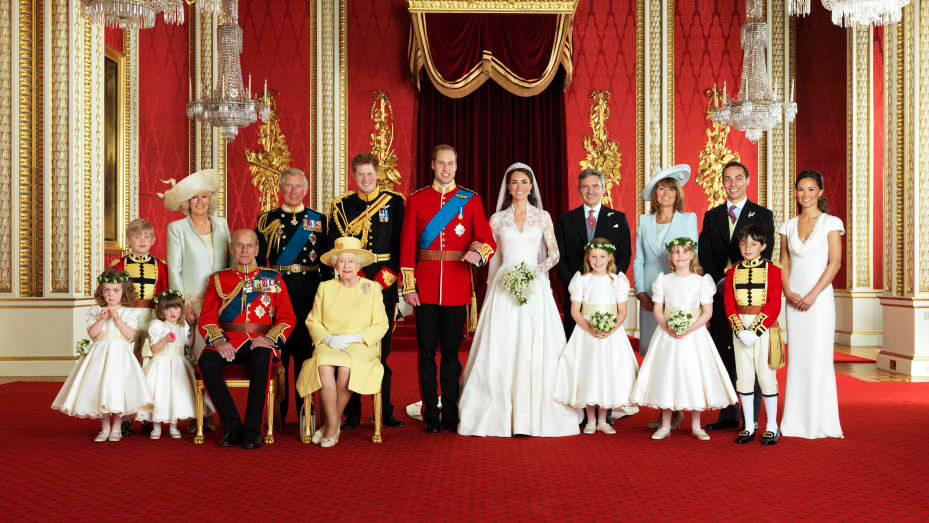
History does not always announce itself with fanfare. Sometimes it arrives in a single, wordless exchange: a king’s hands near a crown, a princess’s quiet smile, and an entire room holding its breath. Something much bigger than a ceremony took place in those few seconds. The photographs prove it. The internet has not stopped looking.