
A Whisper, a Spin, and a Hall Full of Applause
In the heart of a magnificent palace hall, beneath a ceiling that seemed to dissolve into golden light, a moment unfolded that no schedule had ever planned.
Towering chandeliers hung like frozen cascades of crystal, their glow soft and honeyed against the pale stone walls. Great arrangements of white flowers—roses, lilies, and delicate sprays of orchids—lined the long gallery, releasing a faint, clean fragrance into the air. The polished floor reflected everything: the flicker of candlelight, the sweep of formal gowns, the quiet movement of guests who had gathered for an evening of ceremony and celebration.
Through this luminous space walked three figures who immediately drew every eye.
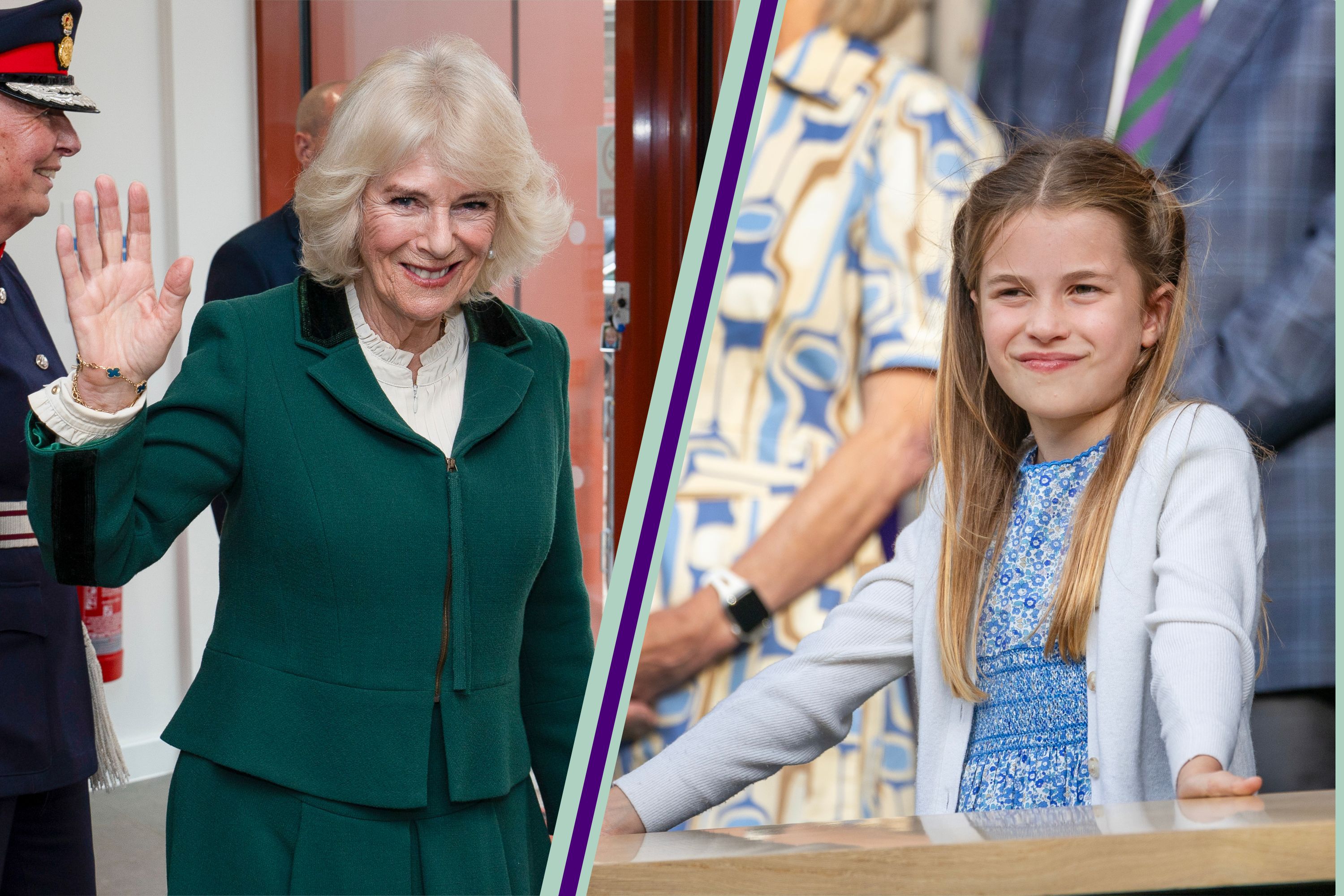
Queen Camilla moved with easy composure in a cream tailored suit and a soft, sculpted hat that framed her face with quiet elegance. Her hand rested lightly on the shoulder of the child beside her. Princess Charlotte, in a bright orange dress scattered with pink and blue flowers, looked both small and remarkably self-possessed. The skirt flared with every step, and her white shoes made soft, precise sounds against the marble. On the other side of the little girl walked Catherine, Princess of Wales, radiant in a long-sleeved gown of deep rose sequins that caught the light like water. The fabric shimmered with every movement, yet her expression remained calm and attentive, her gaze often dropping to her daughter with unmistakable pride.
Slightly behind them, a senior royal in full ceremonial uniform—dark jacket heavy with gold braid and medals—followed at a respectful distance, his presence steady and protective. Around the family, guests in evening dress parted gently, smiling, whispering, raising phones with discreet care. The atmosphere was warm rather than rigid, formal yet already softened by the visible affection between the three women.
They had almost reached the center of the hall when Camilla leaned down.
She bent close to Charlotte’s ear, one hand still resting on the child’s shoulder, her voice low enough that only the little girl could hear. The words were simple, spoken with the easy encouragement of a grandmother who knows exactly how to spark delight.
“Why don’t you show everyone one of your ballet dances, my dear?”
Charlotte’s face changed at once. A spark of excitement lit her eyes. She glanced up at Camilla, then at her mother, as if confirming permission. Catherine gave the smallest of nods, her smile gentle and reassuring. Without another word the child stepped a few paces away from the adults, found a clear circle of polished floor, and prepared herself with the seriousness of someone much older.
She rose onto the balls of her feet. Her arms lifted with surprising grace, fingers softly curved. Then she began.
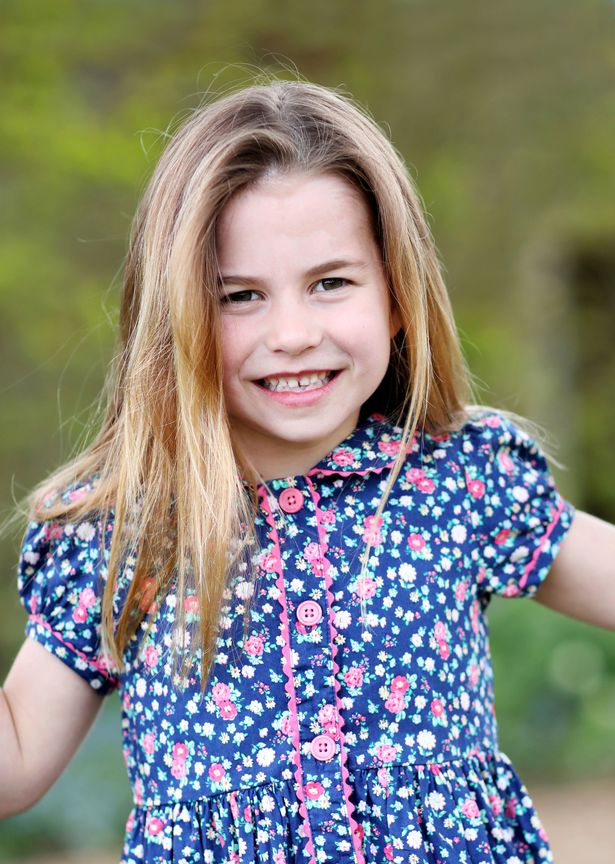
The first turn was careful, almost tentative. The second came more freely, the orange skirt blooming outward like a sudden flower. She moved through a short sequence of steps she had clearly practiced many times in private—small leaps, a neat spin, a moment of perfect stillness balanced on one foot. The hall, so full of low conversation a moment earlier, fell into a collective hush. Even the distant clink of glasses seemed to pause.
Charlotte finished with a precise curtsy, one hand lightly extended, cheeks flushed pink, eyes bright with the pure pleasure of having done something well.
For a single heartbeat the great space held its breath.
Then the applause began.
It started near the front—warm, immediate, unrestrained—and rolled outward like a wave. Guests laughed with open delight. Some clapped above their heads. Others called soft words of praise. A few of the older women pressed hands to their hearts, smiling in that particular way adults do when a child reminds them of something tender and long past. The formal atmosphere of the evening dissolved into something far more human: shared, uncomplicated joy.
Catherine watched her daughter with quiet pride, one hand resting against the front of her shimmering gown. Camilla straightened slowly, her face alight with unmistakable pleasure at the success of her gentle suggestion. The senior royal behind them nodded, medals catching the chandelier light as he joined the applause with open affection. Around them, the crowd continued to cheer, the sound rising and falling like soft music.
Charlotte, still standing in the small clear space she had claimed, looked around at the faces turned toward her. For a moment she seemed almost shy—then she smiled, a wide, genuine smile that made several people laugh aloud again. She skipped back to her mother’s side and slipped her hand into Catherine’s, as if the performance had been the most natural thing in the world.
The formal proceedings of the evening eventually resumed. Guests returned to their conversations, the soft music began again, and the family continued their progress through the hall. Yet something had shifted. The carefully constructed elegance of the night now carried a different warmth. People spoke less of the grandeur of the setting and more of the little girl in the orange dress who had danced without fear in front of hundreds of watching eyes.
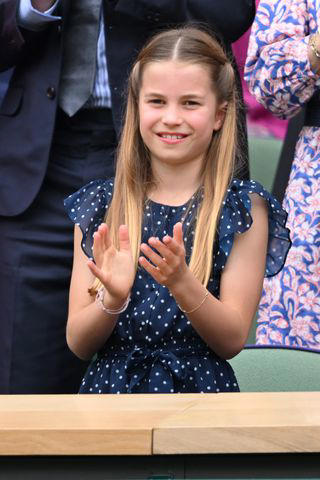
In the days that followed, images of the moment traveled quickly. They showed Camilla leaning close, Charlotte mid-spin with her skirt flared, Catherine’s quiet smile, the senior royal’s approving nod, and the sea of delighted faces surrounding them. Commentators and ordinary observers alike found themselves returning to the same details: the grandmother’s whispered invitation, the child’s unselfconscious courage, the way an entire formal gathering had chosen, without hesitation, to celebrate her.
Royal occasions are often remembered for their dignity, their precision, their adherence to tradition. This one would be remembered for something rarer and more lasting—a few unscripted seconds when a child danced freely, a grandmother’s quiet encouragement opened the door, and a hall full of people decided that the most important thing they could do was simply clap until their hands hurt.
In the end, the grandeur of the chandeliers and the marble and the formal gowns became only the backdrop. What remained, bright and clear, was the memory of a small figure turning on the polished floor, and the sound of applause that felt, for once, entirely unrestrained.