
The Hand on the Parquet
The hall had been dressed for evening, not for rescue. Oak climbed the walls in patient panels. A chandelier hung like a captured constellation and threw its light across a floor laid in herringbone, each board a small decision someone had made a century ago. Tapestries kept their faded wars. In the doorway, older figures waited in the half-distance of family who have learned when not to interrupt. At the centre of all that composure, Princess Charlotte was on her knees.
The champagne gown had spread around her like a fallen constellation of its own—tulle and silver leaves, a child’s evening made suddenly too large. One hand braced the parquet. The other was already reaching. Her face held the particular seriousness of someone who has slipped in a room that does not forgive slips, and has not yet decided whether to be embarrassed or brave.
Prince George saw her before the chandelier did.
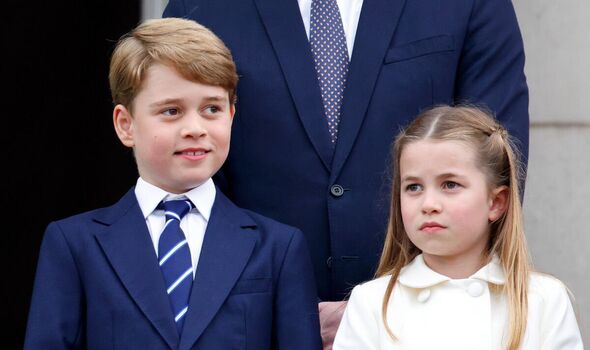
He was in green velvet, a boy dressed as an occasion, and he crossed the last few boards without looking for an audience. There was no performance in the approach. He looked at his sister the way siblings look when the world has gone formal and one of them has remained human. Comfort came first, low enough to stay inside the circle they made together—the kind of sentence that says the floor is not a verdict.
He stepped closer.
His hand found hers. He helped her up as if lifting were a skill he had been practising for this exact minute, not for cameras, not for the grown geometry of the hall. Charlotte rose out of the spilled tulle, the gown remembering how to be a dress instead of a difficulty. George’s other hand went to the skirt, an unshowy adjustment, fabric set back where fabric was meant to fall. It lasted a second. It was the whole of courtesy.
Then he kept her hand.
They walked.
Not toward the parents, not toward the door, not toward any mark a programme might have printed. Simply away from the place where she had been on the floor, two children completing a small private procession across public wood. His head was still inclined, the last of the comfort still in his posture. Hers had begun to return to itself. The parquet took their steps and gave back a quiet that felt older than the chandelier.
Catherine watched from a pace behind, blue ombré falling around her like evening water, a smile already on her mouth—the particular warmth of a mother who has not staged the scene and is therefore free to be glad of it. William, dark tailoring and a pale waistcoat, looked down at the pair with the expression fathers wear when pride and amusement arrive together and neither needs a speech. They did not call the children back. They did not correct the choreography. They let the rescue finish.
Behind them the hall continued its official life. A lamp glowed. A glass case kept whatever the house thought worth keeping. The older watchers remained in their doorway weather, faces arranged into the knowledge that this family, for all its inherited rooms, still produces its own solutions. A girl on the floor. A brother who does not wait to be asked. Parents who understand that the most royal thing in the picture may be the least titled: one child refusing to let another stay down.
Evening wear is designed to suggest that nothing can go wrong. Parquet is designed to prove that it can. Between those two facts George had chosen a third. He had made the accident into a beginning. The gown, reset, moved with Charlotte instead of against her. Their joined hands turned the rest of the crossing into something that looked, from the oak and the gilt, almost like a dance that had not yet admitted it was a dance.
Royal childhoods are too often a lesson in stillness. Stand here. Smile there. Do not let the room see you thinking. Tonight the lesson inverted. Motion was the kindness. Help was the protocol. Walking away together was the ceremony.
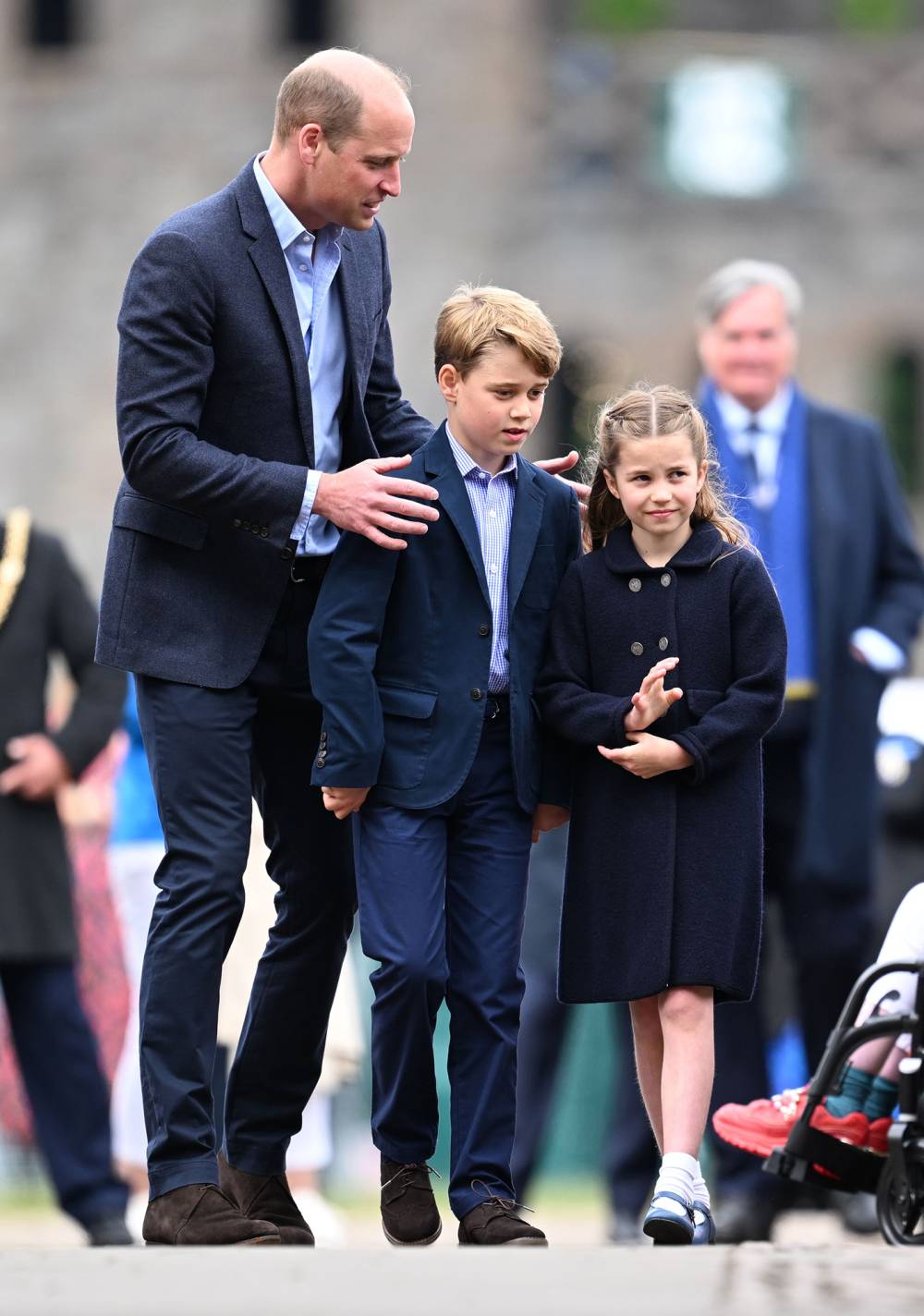
Catherine’s gaze followed them as if she were filing the minute somewhere more lasting than an engagement diary. William’s smile deepened by a degree that no briefing would have authorised. The chandelier kept its cold glitter. The floor kept its warm geometry. What the hall would remember, if wood can remember, was not the slip and not even the jewels. It was the correction that followed: a boy in green velvet treating his sister’s dignity as work worth doing, and two parents standing still long enough to let that work be seen.
They reached the far boards still holding on. The evening, somewhere beyond the panelled doors, still had its toasts and its appointed conversations. For the length of a few herringbone squares, none of that mattered. A child had fallen out of the pose. Another child had put her back into the world. And the palace, for once, had the manners to watch without interrupting.