
The Shoulder She Was Allowed to Use
The staircase had been built to make a descent look like theatre. Gold treads held the light. Chandeliers fractured it. Guards kept their painted stillness at the landing, scarlet and steel, as if the hour were still a procession. The gown — champagne sequins, a pale fur at the shoulders — had been chosen for an entrance. What it had to finish was an exit.
Catherine was exhausted in the way that does not negotiate.
It sat behind the eyes first, then in the chest. Breath came as work. Sadness arrived with it, not as a scene prepared for strangers, only as the body’s honest weather when composure has already spent itself upstairs. She lifted a hand to her temple, then let her head find his shoulder. The fur brushed the green of his coat. She did not ask the guards whether leaning was permitted. She leaned.
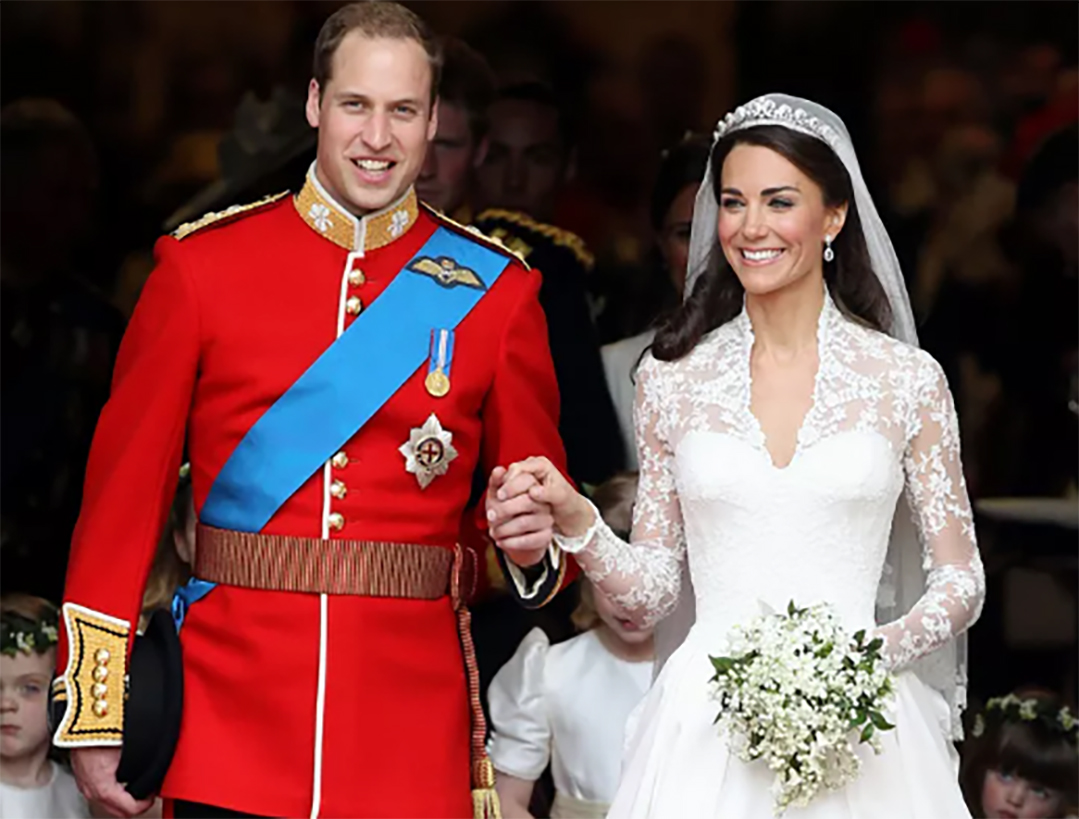
William felt the weight as duty and as fear.
Worry emptied his face of the expression the uniform prefers. Medals, gold cord, the dark green of a dress coat — all of it became only structure beside the fact of her against him. He did not look at the chandelier to measure how the minute would photograph. He fitted his arm to her waist and took the next tread as if the next tread were the only engagement left on the card. Support first. The room below could wait. The smile the night had paid for could wait. Air, if it would come, had to be allowed to come slowly.
They moved like people crossing a river on stones.
Each step was a decision. The train of sequins followed them down in a pale wake, too festive for the labour. She paused without announcing the pause. He paused with her. That is the grammar of a marriage that has learned this weather: I am here. You may use my shoulder. You may look sad on a gilded stair and still be held. You may struggle for breath and not be asked to translate the struggle into dignity before help is offered.
Royal hours are photographed as architecture. Staircases especially. What survives the filing is usually smaller. A temple touched by a tired hand. A head that refused to stay lifted. An arm at a waist that was no longer ceremonial. Later there would be a chair out of sight, water, the ordinary sentences that do not belong in captions. Later the gown would be remembered for its shine and not for the way it had to be managed so she could find the next lip of gold. What the stairwell held, if it held anything, was the unglamorous mercy of being believed.
He did not offer the landing a portrait of devotion.
He noticed the shortness of breath and subtracted the distance. He put himself between her and the drop of the well. He matched his pace to the pace her chest would authorise. The gesture contained no speech and sought no credit. It was the reflex of someone who has stood beside the same person through enough public hours to know when the public hour is over — even when the public hour is still a staircase watched by men who cannot leave their marks.
The guards did not move. That was their work. His work was different. It was to become, for as many treads as required, the vertical thing she could borrow. Sadness does not always need a room. Sometimes it needs only a shoulder that will not shrug it off for the sake of the picture.

Below them a door still waited. Above them painted ceilings kept their expensive calm. Between those two facts they counted breath and gold. She kept her head where she had placed it. He kept his hand where he had placed it. The fur and the medals made an unlikely pact: display cloth doing rescue work.
By the time they reached the turn of the rail the rest of the house would already be rehearsing its next indifference. The photograph, if it survives, will show more than sequins on gold. It will show the instant when an official descent was converted into a crossing, and a woman was allowed, for the length of a stairwell, not to finish the face the night had asked for.
Nothing about the exhaustion was elegant. That is why the holding mattered. Elegance is what the evening had paid for. What it received instead was a man shortening his stride, a woman taking air in careful portions, and a marriage doing the only work that cannot be rehearsed: noticing when the head needs a place to go, and becoming, without a speech, that place.
They went on. Shine against green. Worry against light. A landing still below them. A breath still being earned. The chandeliers, if they kept anything, would keep this: not an arrival, only two people refusing to let a staircase finish a woman who had not yet been given leave to stop.